
-large.webp)
Table of Contents
Lenden Kanoon in Nepal (Muluki Civil Code 2074)
The concept of Lenden in Nepal primarily deals with borrowing and lending activities. It refers to giving or receiving money, goods, or services on credit under an agreement that the borrower must return the amount or its equivalent later. Such transactions are widely practiced in both formal and informal financial systems.
The Muluki Civil Code 2074 governs lending and borrowing activities in Nepal. In the legal system, lending conducted through formal arrangements is regulated by financial laws, banking rules, and contractual obligations, ensuring transparency and enforceability. However, in many traditional or rural settings, Lenden may take place informally, based on trust and social relationships. Whenever two or more individuals exchange goods or money under any conditions, a transaction is considered to have occurred.
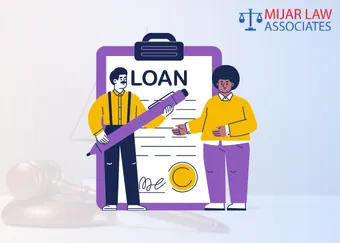
Loan Transaction
When a person receives money or goods from another person with the responsibility to return them, it is recognized as a loan. The borrowed amount must be repaid as agreed.
Execution of a Deed
The code states that no financial transaction should occur without a proper deed (Lekhapadhi). A deed is any document used as proof of a transaction, such as a cheque, receipt, bill, or voucher. A legally valid deed must be prepared before carrying out the loan agreement.
Required Details in a Loan Deed
A valid loan deed must include the following details:
- Name, age, address of all parties, including names of parents and, for married persons, spouse’s name
- Purpose or reason for the transaction
- Total transaction amount
- Price of goods exchanged (if applicable)
- Terms relating to borrowing or credit
- Description of goods (if included in the transaction)
- Exact repayment date
- Rate of interest (if charged)
- Condition allowing the creditor to recover dues from the debtor’s assets in case of default
- Place and date of execution
- Any additional conditions relevant to the transaction
These elements ensure the deed is clear and legally enforceable.
Interest Rules on Loan Transactions
- If the deed mentions an interest rate, the creditor can charge interest as per the agreement.
- Interest may not exceed a maximum of 10% per annum of the principal.
- If the deed obligates interest payment but does not specify a rate, the creditor may charge up to 10% interest.
- If a profit is mentioned instead of interest but the amount is not specified, it will be treated similar to interest.
- Interest collection beyond the principal amount is prohibited.
Ban on Compound Interest
The law strictly forbids creditors from charging compound interest. Only simple interest is allowed.
Procedures for Repayment
- When full repayment of principal and interest is made, the creditor must return the deed to the debtor, marking the payment or tearing the document.
- If the original deed is missing, the creditor must issue a receipt acknowledging payment.
- For partial repayment, the creditor should note the paid amount on the back of the deed. If the deed is not available at that moment, a separate receipt must be issued with the debtor’s signature.
Validity Period of a Loan Deed
A household transaction deed remains valid for ten years. If the debtor repays or extends the loan within those ten years, a fresh ten-year period begins from the date of repayment or renewal.
If the matter goes to court within the valid period, the creditor may continue to recover interest until full settlement as per the court’s decision.
Transactions with Incompetent or Quasi-Competent Persons
Loans made to individuals who cannot legally enter into contracts—such as minors or individuals lacking mental capacity—are not recognized unless approved by the responsible guardian or head of the family.
Recovery from Common Property
- If a loan is made without approval from the household head, the creditor cannot recover the amount from common family property until the debtor proves their rights over it.
- The creditor may file a legal claim within ten years to secure recovery rights.
- Once the debtor’s ownership in the common property is established, the creditor can recover the loan.
Recovery Without a Formal Deed
Even when a deed is not executed properly, if there is enough evidence such as:
- Banking documents
- Cheques
- Bills or vouchers
- Account books
The court may still order repayment by the debtor to ensure justice.
Statute of Limitations
There is no time limit for filing a lawsuit in cases involving:
- Intentional misuse or damage to property belonging to an incompetent or quasi-competent person
- Fraudulent loan transactions
- Collection of compound interest
- Interest collection exceeding 10% annually
Such cases are treated seriously to protect vulnerable individuals and prevent exploitation.
Lenden Kanoon under Muluki Civil Code 2074 ensures that borrowing and lending activities take place within a structured legal framework. It promotes accountability by requiring proper documentation, restricts unfair interest practices, and safeguards the rights of both creditors and debtors. The law also provides mechanisms for dispute resolution and loan recovery while maintaining financial discipline and protecting citizens from abuse or exploitation in loan transactions.
Disclaimer: This article is intended solely for informational purposes and should not be interpreted as legal advice, advertisement, solicitation, or personal communication from the firm or its members. Neither the firm nor its members assume any responsibility for actions taken based on the information contained herein.




-icon.webp)